

Ask a duck hunter why he bought his last call and he probably won't mention the reed or the tone board. He'll tell you about a morning when a group of mallards circled twice, cupped up, and came in feet-down over the decoys.
That's what he's really paying for. Once we understood that, the ads we wrote for Elite Duck Calls became a lot more effective.
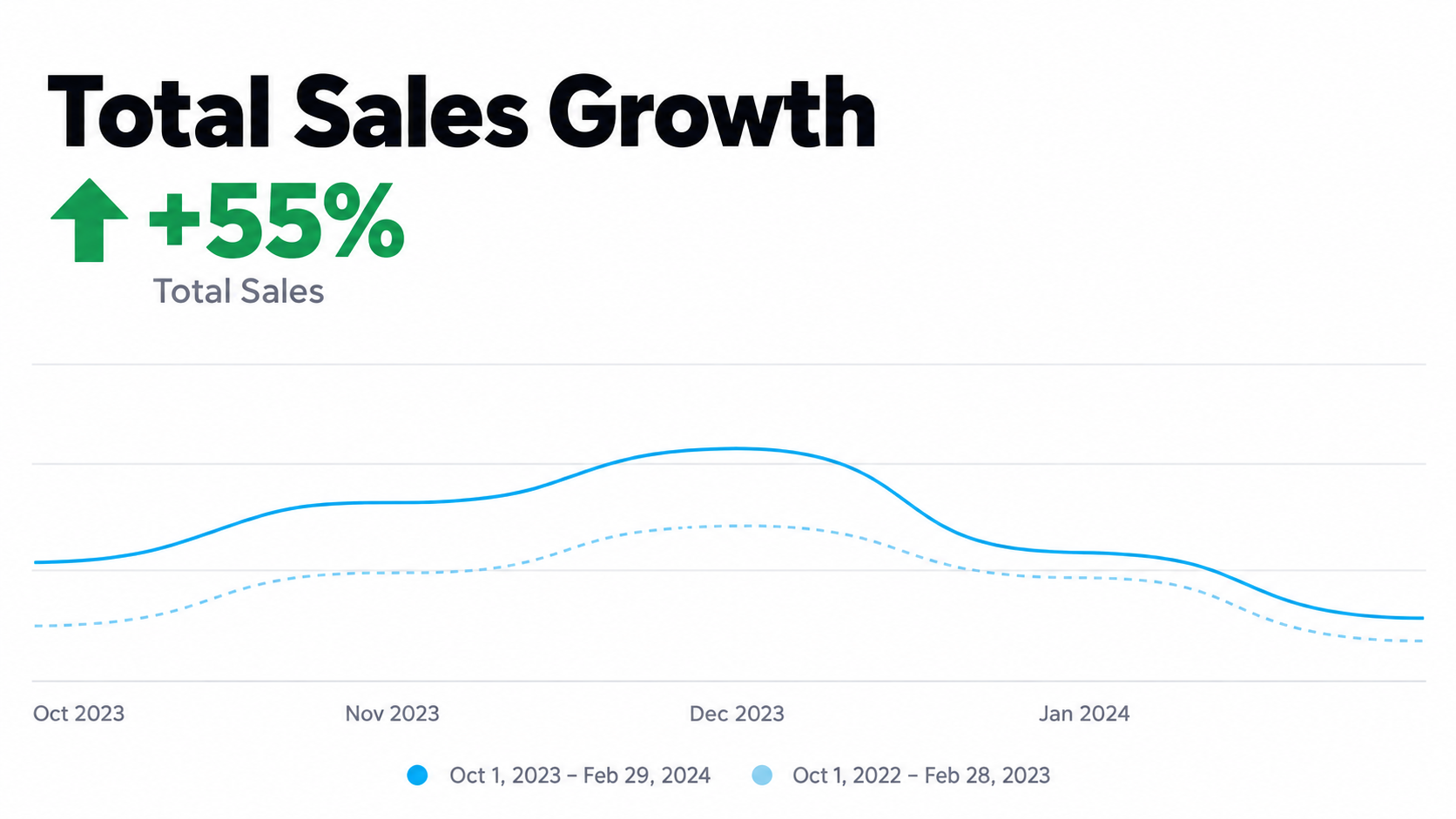
We started working with Elite in September 2023. Since then we've grown their sales 55% in our first season, watched them fall 24% during the year they spent with another agency, and helped them climb 67% this year, most of it before opening day.
Here's what we did, why it worked, and what you can borrow for your own Shopify store.
Elite Duck Calls was founded by Brad Allen, a three-time world duck calling champion. Brad still hand tunes every call himself in Searcy, Arkansas.
It's a great story, but our job was to figure out how to turn that story into ad campaigns that convert. Before writing a word, we needed to figure out which parts of it actually get a hunter to pull out his card to buy, and which parts are just nice to know.
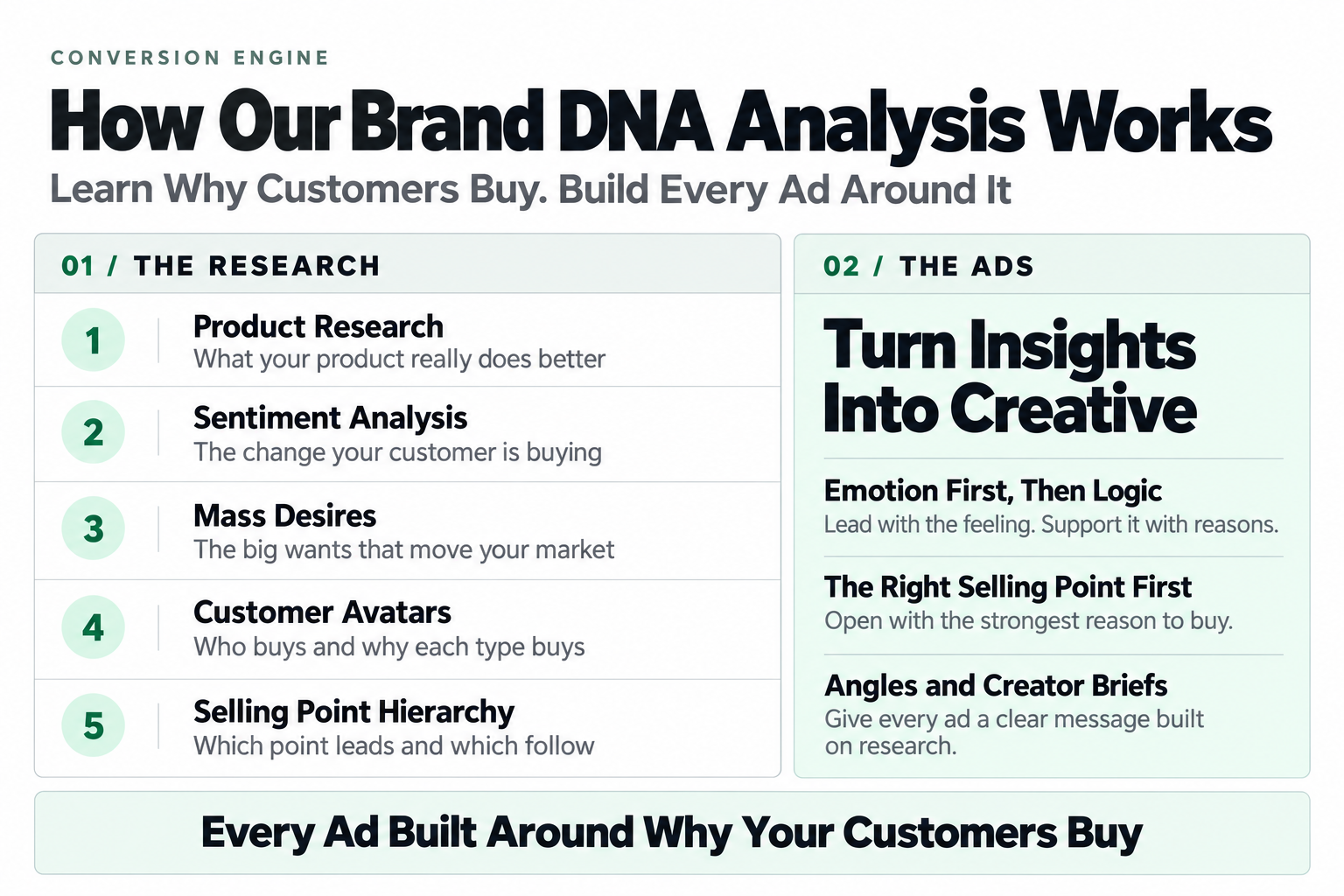
Every new client starts with what we call a Brand DNA Analysis. It's in-depth, hands on research: product pages, customer reviews, competitor ads, the founder's background, the brand story. The goal is to rank every selling point by how much it actually influences a purchase. We call that building the selling point hierarchy.
Here's where Elite landed:
The champion tuning came out on top by a mile as the unique differentiator. When you buy a duck call online, you can't blow it first, so you're taking a risk on how it will sound. Knowing a world champion tuned it before it shipped takes a lot of that risk away. Psychologists call this authority bias: when we can't judge something ourselves, we lean on someone who can.
So Brad's titles go first in almost every ad we write for Elite. Durability and origin are there to back that up, not to compete with it.
Next, we went through Elite's customer reviews looking for the words hunters use when they talk about their calls. We didn't care about star ratings. We wanted the actual phrasing. A few lines kept showing up in different forms, and we lifted them almost word for word:
When an ad sounds like something your customer would say to his buddy in the blind, it stops reading like an ad. Familiar language is easier for the brain to process, and people tend to trust what feels easy. Our goal and the copywriters job is to make it sound like ads are written by someone fluent in the customers language, not a marketer sitting at a corporate desk on the 20th floor in New York City.
Precision tuning is a feature. A flock that finishes in the decoys is what that feature gets you, and that's what we wrote about. Headlines like "Bring Your Decoys to Life" and "Put More Ducks on the Water" are built so the hunter pictures the result before he even clicks.
There's solid research behind this. When people imagine themselves using a product and getting what they want from it, they're more likely to buy. It's about focusing on outcomes, not features, and it's one of the most important tools in the eCommerce ad copywriting toolbox.
In much of the country, duck season runs about 60 days. Between work and family, most hunters only get out a handful of those mornings. A bad hunt stings for the next couple of months.
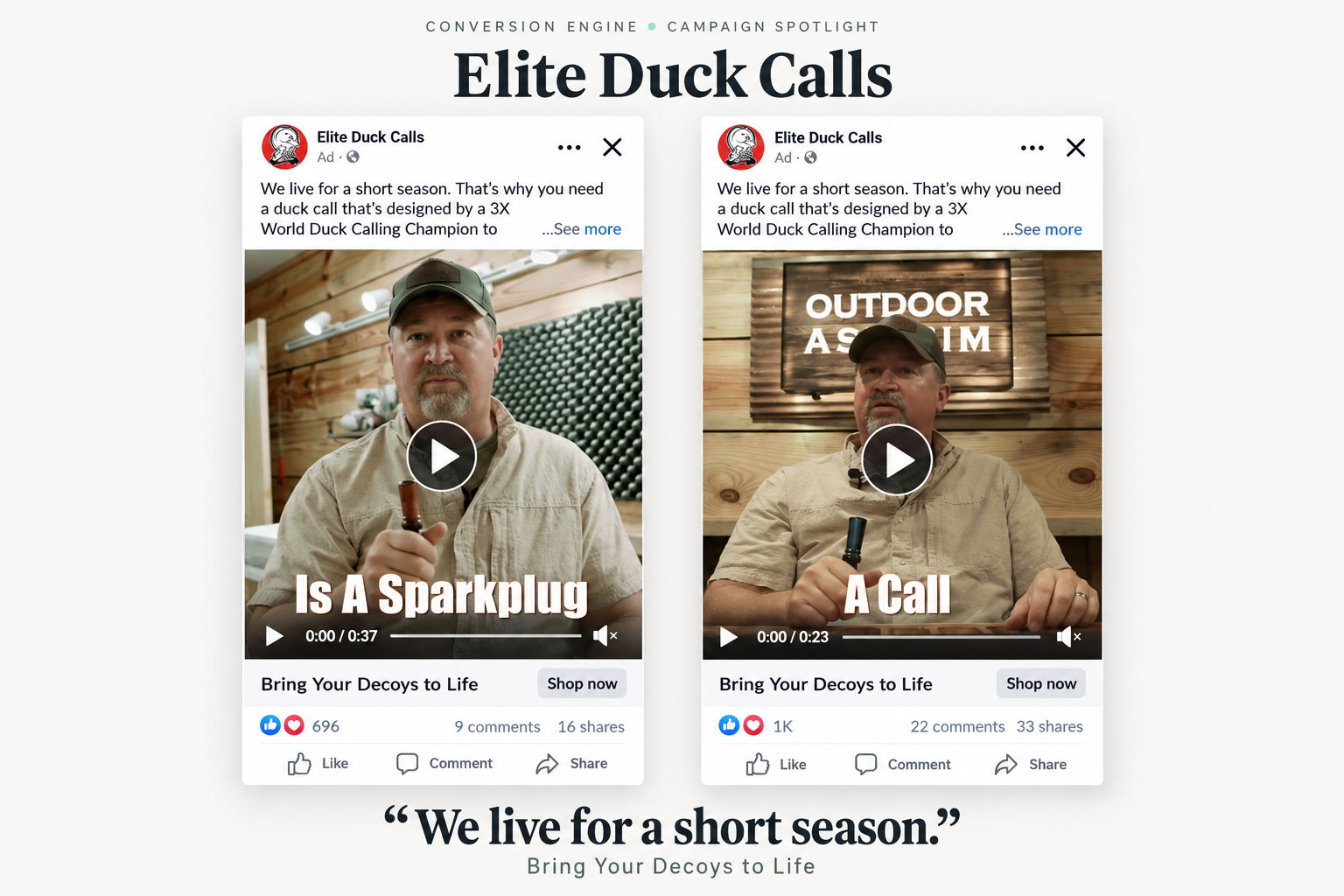
That's where "We live for a short season" came from. We didn't need countdown timers or fake deadlines, because hunters already feel the clock. Loss aversion, the psychological tendency for losses to hit about twice as hard as equal gains, does the rest.
Those first campaigns grew Elite's sales 55% in our first six months together (Oct 2023 to Feb 2024, compared with the season before). We kept building on that through the following year.
Going into the 2025 season, Elite hired a new agency that pitched lifestyle videos as the missing piece to the puzzle. They pitched organic-style social plus cinematic footage as the piece that would take Elite Duck Calls to the next level. We understand why that pitch landed. It looks great, and it feels like brand-building, but it didn't sell as many calls.
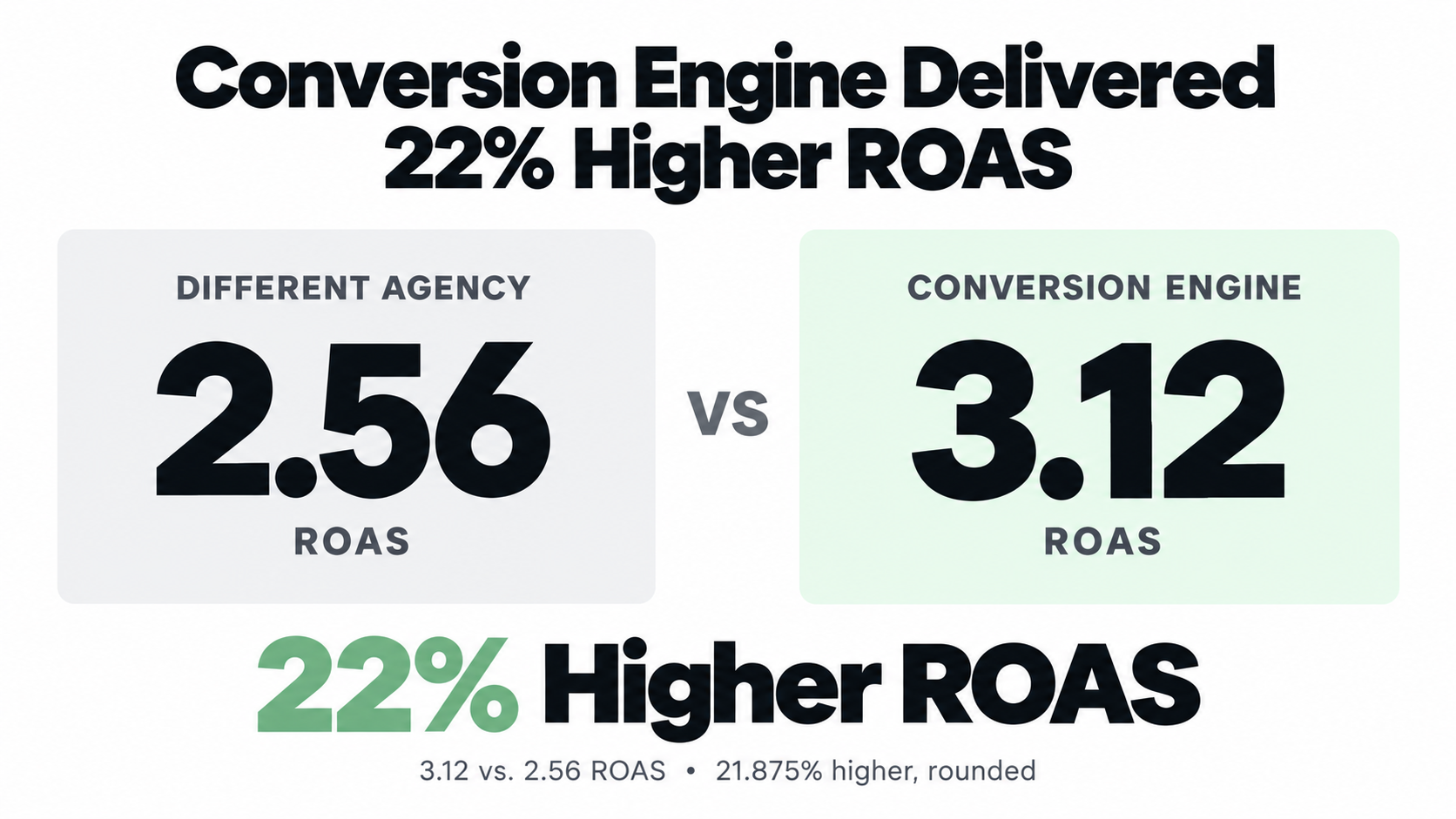
Peak-season sales dropped 24% (Oct 2025 to Feb 2026, compared with the year before). On ad efficiency, our campaigns had returned $3.12 for every dollar spent. Theirs returned $2.56. That's 22% more revenue per ad dollar with us.
Put the two ads side by side and it's easy to see why:
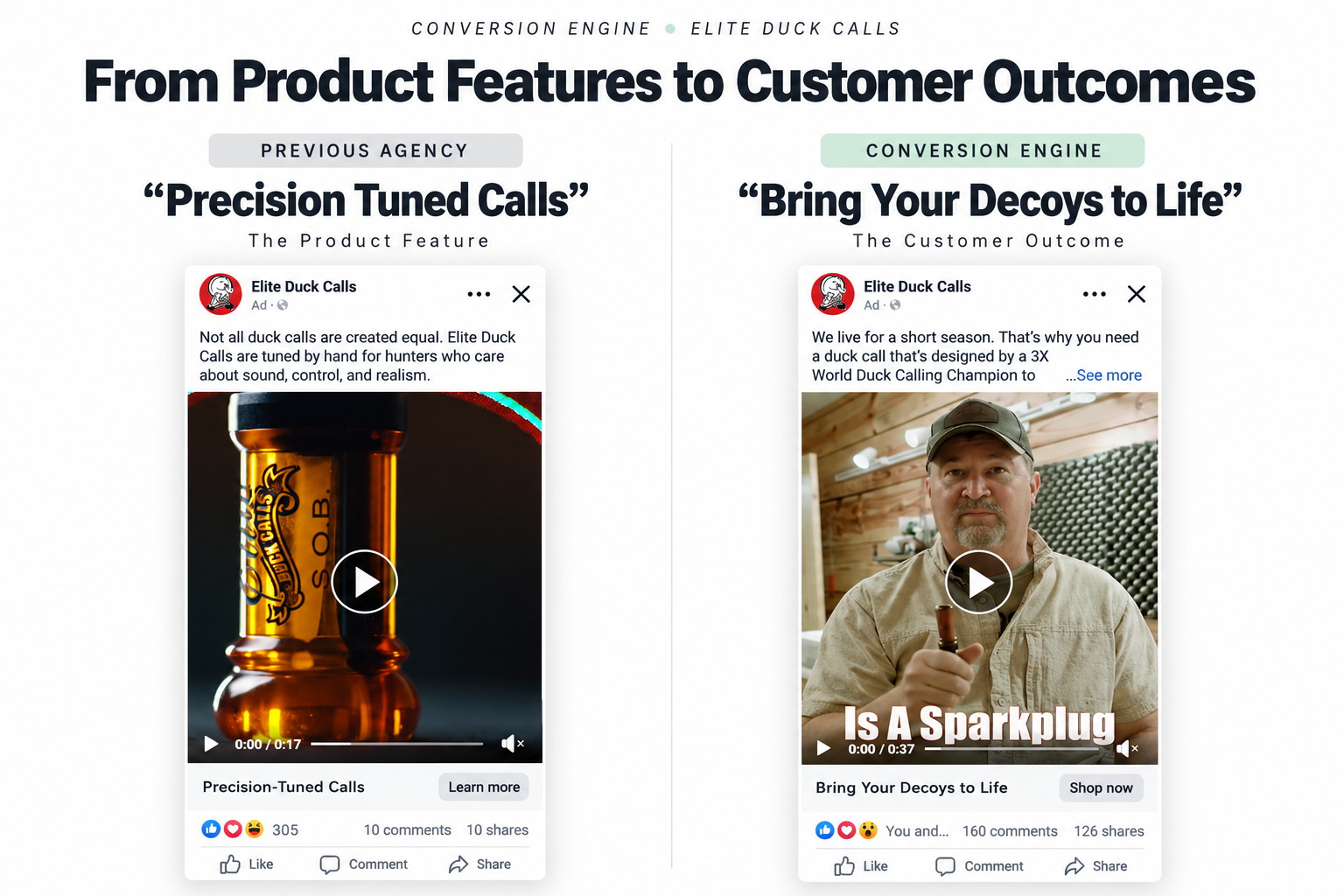
Their ad asks the hunter to evaluate a claim. Ours puts him back in the marsh. I'll let you guess which one sold more calls.
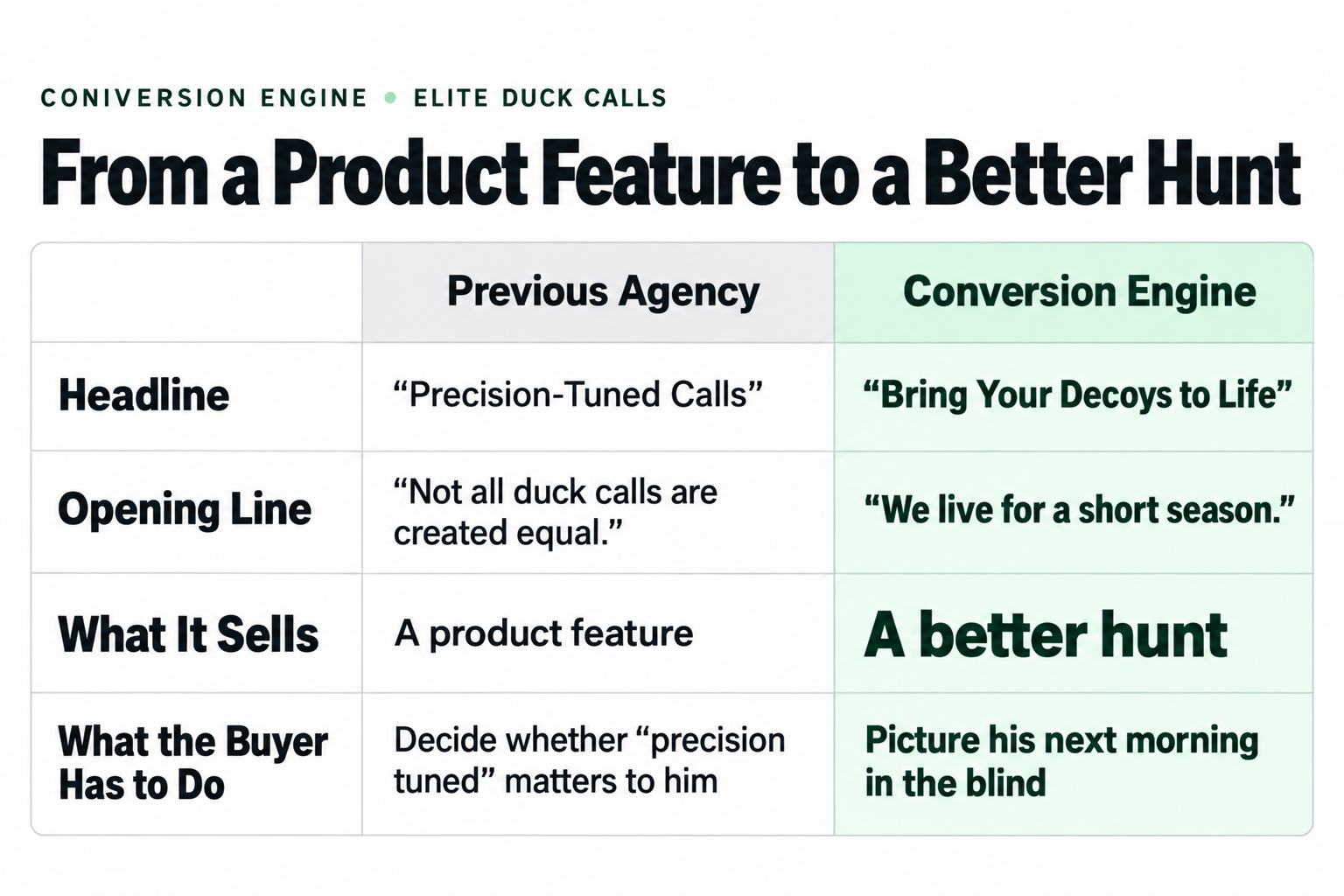
If you're a Shopify founder weighing a similar pitch, lifestyle content has its place. But on Meta, every ad is like a salesperson in the field and needs to be built around why customers buy, and why they need to buy now.
Elite came back to us for the 2026 season. This time we started running ads in the summer instead of waiting for fall.
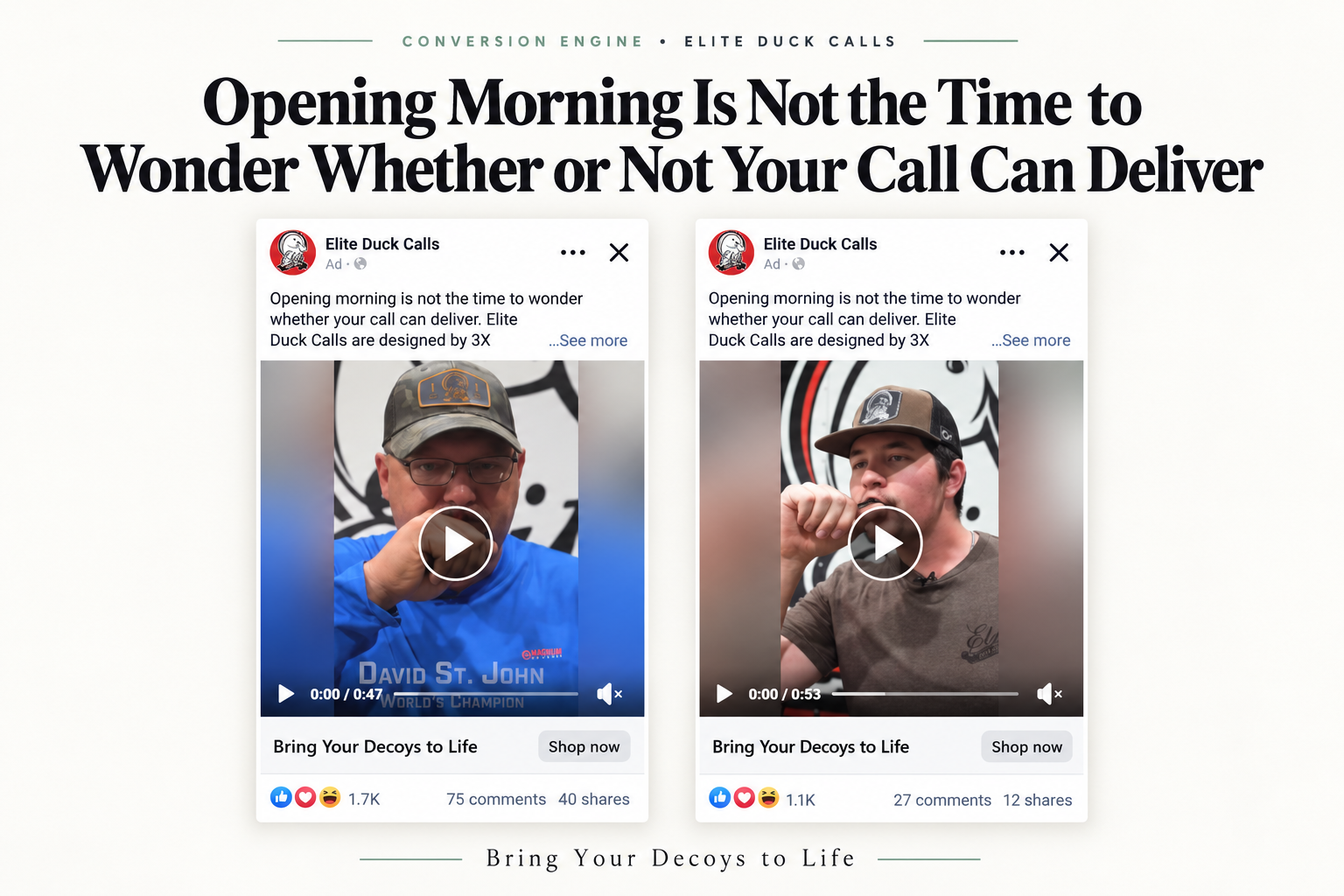
The campaign was built around one line: "Opening morning is not the time to wonder whether or not your call can deliver."
In July and August, hunters are dreaming about opening day. They're scouting, patching waders, and getting their gear ready. The ad meets them in that moment and raises a small, specific worry: what if your call lets you down when the birds are finally working?
That's anticipated regret, and it's a strong motivator, because nobody wants to replay a blown hunt for the rest of the season. It also hands hunters a practical reason to buy early in order to give them time to practice.
Year-to-date sales are up 67% (Jan 1 to Oct 30, 2026, compared with the same stretch of 2025), and the growth started in July, months before the season started.
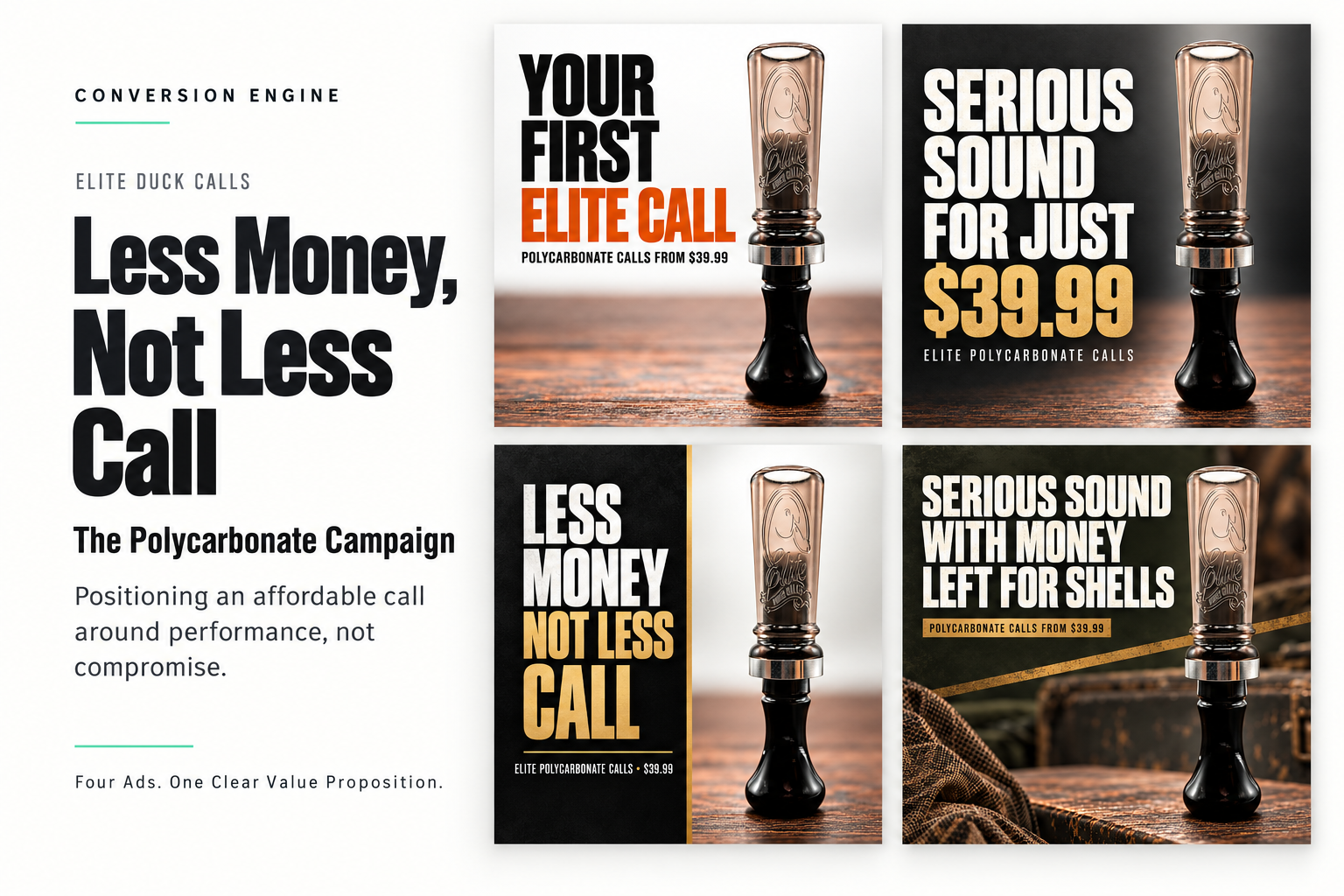
Not every hunter is ready to spend on a top-tier call. So we built a separate campaign for Elite's polycarbonate line, which costs less but still sounds like an Elite duck call.
The headlines carried most of the load: "Less Money, Not Less Call," "Your First Elite Call" and "Serious Sound With Money Left for Shells."
That last one leans on mental accounting. Hunters budget for the whole season, not just the call, so a cheaper call that leaves room for ammo feels like a smart move instead of a compromise. It also gives first-time buyers a way into the brand without discounting the flagship calls.
None of this came from a bigger budget or a lucky viral video. It's the same process we run for every Shopify brand we work with:
When we get those right, we typically see ROAS improve 20 to 25% and revenue grow 50% or more in the first 60-90 days.
What exactly is consumer psychology for eCommerce advertising?
It's the study of why people buy, applied to your ads. Instead of listing features, you write around the mental shortcuts and emotions that drive a purchase, like trust in experts, fear of missing out, or picturing the result. For Elite Duck Calls, that meant leading with a world champion's tuning and selling a better hunt instead of a just better call.
How do you consistnetly improve ROAS on Meta ads for a Shopify store?
Start with the message before you touch budgets or audiences. Rank your selling points, pull language from your customer reviews, and write ads about the outcome your customer wants. Elite's campaigns built this way returned 3.12 ROAS, compared with 2.56 from a lifestyle-first video approach.
Are lifestyle videos or direct-response ads better on Meta?
For driving sales, ads with a clear reason to buy usually win. Lifestyle content can support a brand, but Elite's sales fell 24% in the season it over-relied on that approach. When the brand returned to outcome-focused direct response, sales grew 67% year-to-date.
What is a selling point hierarchy?
It's a ranked list of your product's selling points, ordered by how much each one influences a purchase. The top item becomes the hero message in your ads, and the rest support it. Too many brands accidentally give every feature equal weight, which means the most important message doesn't stick.
How should seasonal brands time their Meta ads?
Earlier than you think. Elite started running pre-season ads in summer, when hunters were already thinking about opening day, and the sales gap over the prior year opened in July. Buyers who have time to prepare will often buy early if you give them a reason.
Conversion Engine builds Meta ad campaigns for Shopify brands doing $1M+ a year. Every engagement starts with the same research that grew Elite Duck Calls: your selling point hierarchy, your customers' own words, and the moments when your buyers are most ready to act.
Book a free Meta ads audit today and we'll show you where your current ads are leaving the most money on the table.

Scaling Fast-Growing eCommerce Brands with Profitable & Predictable Growth Strategies | Paid Media & Retention Expert | DM to Discuss Your Growth Potential
